Disney CEO Josh D'Amaro Details AI Plans for Walt Disney World Parks and Beyond
D'Amaro outlined AI-assisted trip planning tools, next-generation interactive robotics, and Imagineering design workflows during Disney's third quarter earnings call today.
Disney CEO Josh D'Amaro used today's third quarter fiscal 2026 earnings call to detail how artificial intelligence is shaping the company's future, including projects that will directly impact Walt Disney World guests. Two analysts pushed D'Amaro on AI during the call, and his answers revealed plans for next-generation robotics, AI-assisted trip planning, and faster park design workflows at Imagineering.
For Walt Disney World fans, the most relevant pieces are happening on the guest experience side. D'Amaro said Disney's research and development labs are working on next-generation robotics designed to interact with guests in personal, emotional ways, not just functional ones. On the planning side, AI is being used to cut down on the complexity of booking and planning a Disney vacation, with the goal of tailoring the experience to what each guest wants.
Nothing specific has been announced for Walt Disney World yet. But based on today's comments, AI-assisted trip planning tools and new robotics at the parks both appear to be in active development.
How AI Is Showing Up Across Disney
Sean Diffley from Morgan Stanley asked how AI is showing up in filmmaking and whether it saves money or just speeds things up. Brian Kraft from Deutsche Bank asked where Disney has seen the biggest payoff from its broader technology investment so far. D'Amaro's answers covered the studios, streaming, parks, and ESPN.
D'Amaro said Disney uses AI across its studios and the rest of the company to work faster and support the creative process. He pointed to a production history that includes Industrial Light and Magic, Pixar, Disney Research Studios, and Walt Disney Imagineering, and said the company is building on decades of experience in this area now with AI tools.
On the studio side, AI is helping Disney get films to market faster. It's letting the studio release more titles in 3D and add visual effects to shots that would have been too costly to do by hand before. AI also speeds up technical steps like rendering and denoising.
D'Amaro was direct on one point: the creative process stays human led. He said it will always be human centered, artist driven and creator led.
On the streaming side, AI powers personalization and recommendations on Disney Plus. Disney's ad and marketing teams are also testing AI-generated creative for ads. At ESPN, AI supports fan engagement tools like Sports Center for You, new ad formats, and production tasks such as live captioning and highlight clipping.
Data Unification Across Parks, Streaming, and Consumer Products
D'Amaro said data unification is a top priority for him across the whole company. Disney is working to connect consumer data from parks, streaming, studios, and consumer products into one system, so it can serve fans better and understand them across every touchpoint.
That unification effort ties directly into the AI-assisted trip planning work D'Amaro mentioned. The goal is to simplify decisions like dining reservations, Lightning Lane, and resort choices by tailoring the experience to what each guest wants based on their preferences across all Disney touchpoints.
Imagineering Using AI to Design More Ambitious Park Experiences
D'Amaro said Imagineering is using AI tools to help design more ambitious park experiences, and to do it faster than before. He didn't elaborate on specific projects during the call, but the comments suggest AI is being integrated into the design process for future attractions and lands.
That builds on a partnership Walt Disney Imagineering announced in June 2026 with Adobe Firefly Foundry, bringing three AI tools into park design. The partnership was mentioned in the source material but cut off before details were provided.
The Timeline Leading to Today's Announcement
Today's comments build on a strategy that's been developing since 2023. Disney set up an internal task force in early 2023 to look at AI across the studios, theme parks, and advertising. The goal was to build AI and machine learning skills in-house and work with outside startups.
Between 2023 and 2024, Disney Research and Walt Disney Imagineering began developing free-roaming robotic characters, including Star Wars BD-style droids trained to walk using Nvidia's Isaac Sim platform and run on Nvidia Jetson computers. Disneyland guests got a look at an early playtest in Galaxy's Edge in October 2023, and the droids were shown publicly at Nvidia's GTC AI conference in March 2024.
In February 2026, then-CEO Bob Iger announced a licensing agreement with OpenAI letting users create 30-second videos using around 250 Disney characters through the Sora platform. The deal excluded human voices and faces, ran for three years, and paid Disney for the license, with plans to bring some Sora-made videos to Disney Plus. Iger framed it around three goals: AI as a creative tool, AI for operational efficiency, and AI for strengthening direct-to-consumer platforms. The deal has since ended, after OpenAI shut down Sora.
D'Amaro became CEO in March 2026. His official strategy centers on pairing human creativity with newer technology, and he's made AI-assisted trip planning a specific focus, aiming to simplify decisions like dining reservations, Lightning Lane, and resort choices.
In April 2026, Disney published a patent for a machine learning system that uses cameras to verify ride restraints are secured before dispatch. It's designed to catch situations a human operator might miss, such as a guest sitting on top of a seat belt instead of under it.
In June 2026, Walt Disney Imagineering announced a collaboration with Adobe Firefly Foundry, bringing three AI tools into park design. The source material cuts off before providing details on what those tools are.
What This Means for Walt Disney World Guests
The trip planning tools D'Amaro described could address one of the biggest pain points for Walt Disney World guests: the complexity of planning a vacation. Between dining reservations, Lightning Lane passes, park tickets, resort bookings, and special events, the current planning process requires juggling multiple systems and timelines.
If Disney can unify that data and use AI to personalize recommendations, it could streamline what many guests find overwhelming. The key will be whether the tools actually simplify the experience or just add another layer of technology to navigate.
The robotics work is more speculative at this point. D'Amaro's emphasis on personal, emotional interactions suggests Disney is aiming beyond the BD droids that appeared at Disneyland in 2023 and 2024. Those droids could walk and react to guests, but they were limited in scope. Next-generation robotics could mean characters that hold conversations, respond to individual guests, or play a role in storytelling within attractions.
Disney hasn't said when any of these projects will reach Walt Disney World, or what form they'll take when they do. But today's earnings call makes it clear that AI is a major focus for D'Amaro's leadership, and the parks are a key testing ground for what the company builds next.
/ More from FirstDrop
 Walt Disney World
Disney World Quietly Raised Prices on Tours, Dessert Parties and Fantasmic Dining, and Ended a Favorite Discount
Beyond tickets and annual passes, Disney World raised prices on tours, fireworks dessert parties, GEO-82 and Fantasmi…
 Walt Disney World
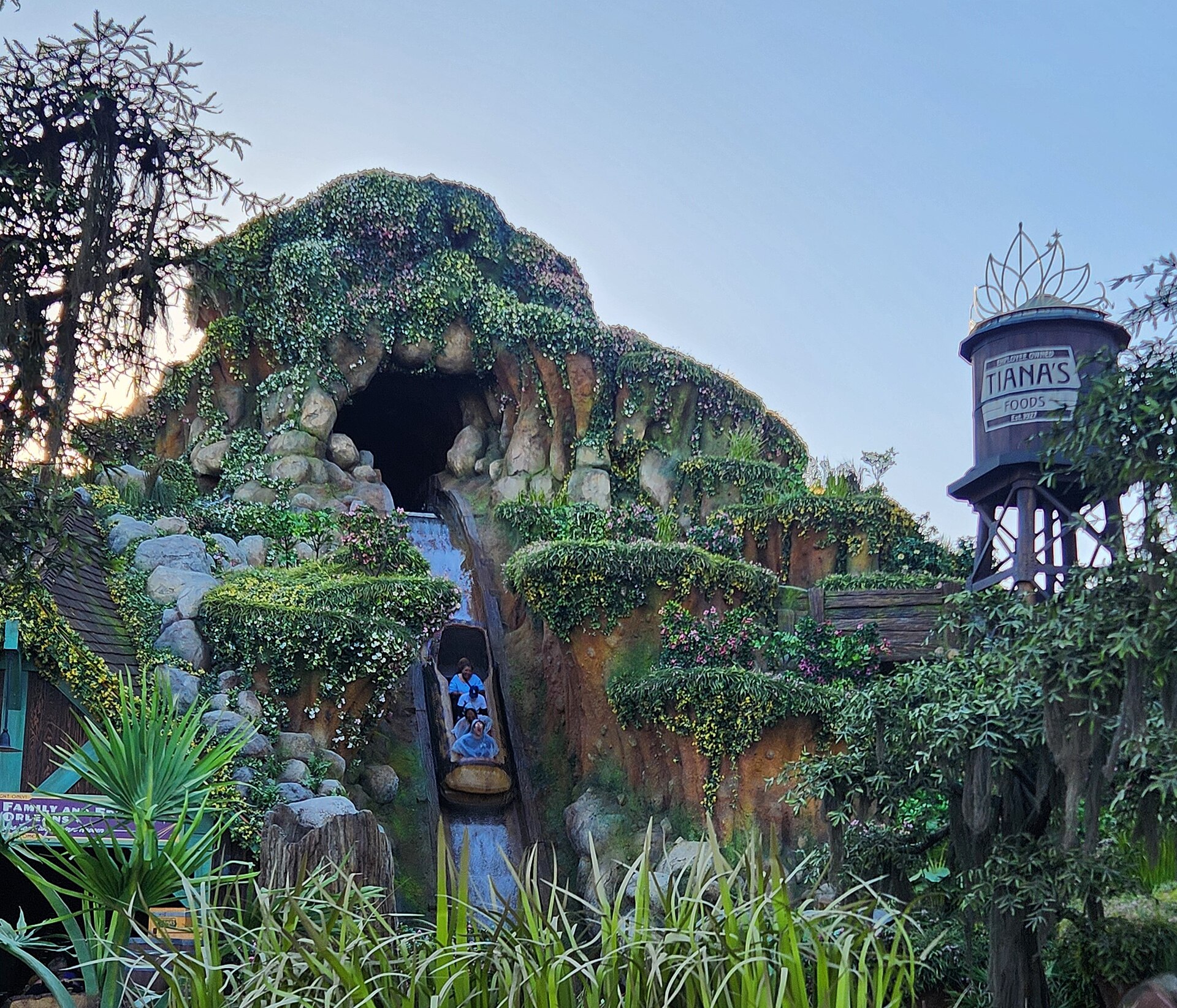
Tiana's Bayou Adventure Closes November 2 for Its First Refurbishment, With a December 18 Return on the Calendar
Magic Kingdom's log flume goes down for about six and a half weeks, right through Thanksgiving. Here's what we know a…
 Walt Disney World
Every New Disney Ride Coming in the Next Year, From Encanto to a Brand New Space Mountain
Disney has eight new rides on the way across four resorts, led by Animal Kingdom's Tropical Americas, a reworked Caro…
 Walt Disney World
Disney World and Disneyland Raise Prices on Tickets, Annual Passes and Lightning Lane
Disney World's peak one day ticket now hits $229 and every annual pass tier went up. Disneyland raised four ticket ti…